Thinking about buying or selling in Arlington and wondering how much being near a Metro station really matters? You want convenience, but you also care about price, parking, and long-term value. In this guide, you’ll learn how Metro proximity typically influences price, demand, days on market, and resale in Arlington, plus practical distance benchmarks and trade-offs to weigh. Let’s dive in.
Metro proximity and value in Arlington
Arlington’s stations anchor high-demand corridors with jobs, restaurants, and daily conveniences. Across studies and local market experience, homes closer to rapid rail often command a “transit premium,” sell faster, and attract a larger buyer pool. The exact premium varies by station, building type, and market cycle, but the pattern is consistent.
County planning supports this demand. Arlington’s Transit Station Areas encourage higher density and mixed use near stations, which helps sustain long-term interest in nearby housing. Major employers and redevelopment in National Landing have also intensified demand around Crystal City and Pentagon City.
Price and demand
Proximity to frequent transit expands your buyer pool to commuters, car-light households, and investors. That broader audience typically supports stronger pricing relative to similar homes farther away. Investor interest can be especially active for condos near stations, which can lift prices in buildings that appeal to renters.
Days on market and liquidity
Homes within an easy walk to Metro usually spend fewer days on market compared with similar options in more car-dependent areas. More buyers are willing to tour and write offers when the location simplifies commuting and daily errands.
Long-term resilience
Transit-rich addresses often hold relative value over time. As Arlington invests in station-area amenities and mixed-use density, locations with persistent accessibility advantages tend to remain competitive, even as market conditions shift. While remote work affected ridership in recent years, demand for walkable, transit-accessible housing has rebounded with the return of offices and urban amenities.
How close is close enough?
Use walk-time, not just straight-line distance. Entrances, street crossings, and barriers matter. Here is a practical framework to help you set expectations.
0–0.1 mile (1–2 short blocks)
- What to expect: Highest convenience premium and strong investor interest. Often the lowest days on market in the immediate area.
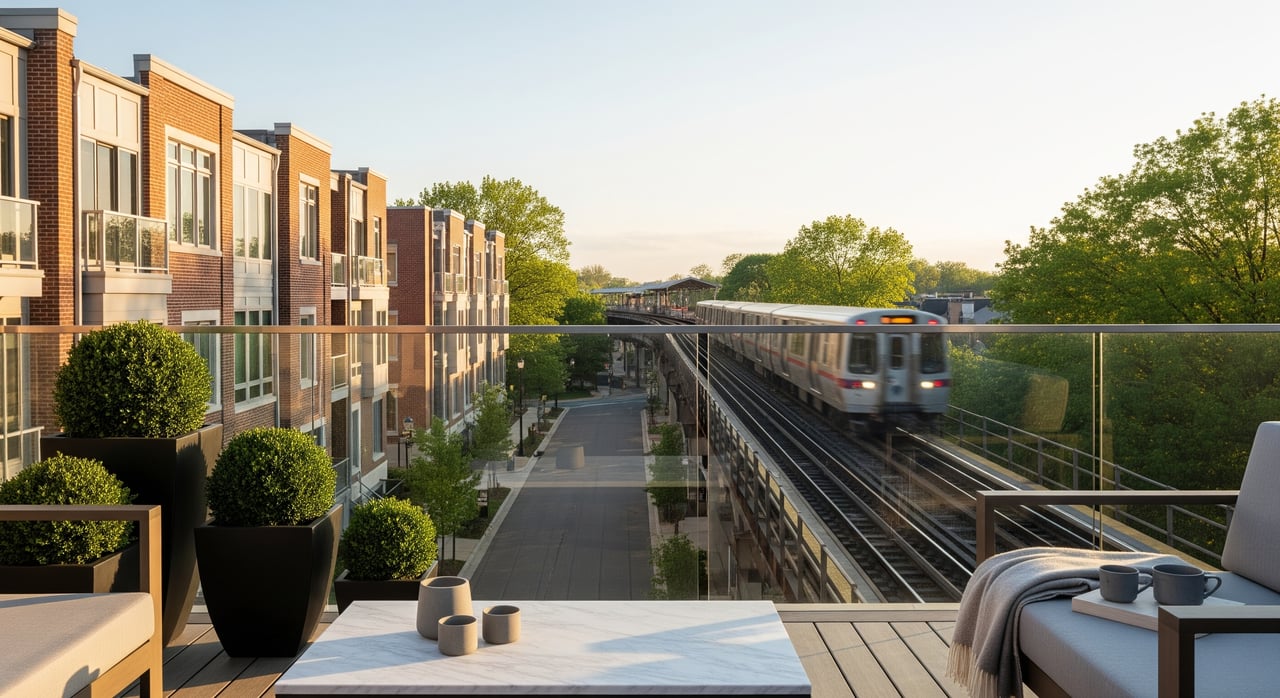
- Trade-offs: More street activity and potential noise or vibration depending on track alignment. Parking can be limited. Building types are often condos or apartments.
- Best for: Car-light buyers, commuters, and investors.
0.1–0.25 mile (about a 2–5 minute walk)
- What to expect: Strong premium and a large buyer pool. Feels close without being on top of the station.
- Trade-offs: Slightly better parking options than immediate adjacency, but still relatively dense.
- Best for: Buyers who want convenience and a more residential feel.
0.25–0.5 mile (about a 5–10 minute walk)
- What to expect: Moderate transit premium. Often a smart value play with near-equivalent access at a lower purchase price.
- Trade-offs: Less investor concentration. More options for yards, schools, and parking.
- Best for: Buyers seeking balance between transit access and residential amenities.
0.5–1.0 mile (about a 10–20 minute walk)
- What to expect: Smaller direct premium, but still strong lifestyle value, especially with good bus and bike connections.
- Trade-offs: Broader mix of housing, including rowhouses and single-family pockets. Prices may be more accessible.
- Best for: Buyers comfortable walking or biking, or making a short drive or ride to the station.
Beyond 1.0 mile
- What to expect: Transit access is a secondary factor. Neighborhood features like lot size, renovations, and parking drive price.
- Best for: Buyers prioritizing space, private yards, and vehicle access.
Key trade-offs to weigh
Convenience
Shorter commutes, fast access to D.C., and a dense mix of shops and restaurants boost demand near stations. Peak-hour crowding at major nodes can affect comfort, so check your route and timing.
Noise and vibration
Noise depends on track type and distance. Elevated or at-grade alignments tend to be louder, while underground stations reduce surface noise. Orientation, quality windows, and interior layout can help. If you are selling, highlight any mitigation work.
Parking and vehicle access
Closer-in buildings may have limited on-site parking, higher garage costs, or permit restrictions. Confirm HOA allocations, visitor rules, and neighborhood permit zones before you write an offer. If you are selling, clarity on parking can help the right buyers act quickly.
Building type and carrying costs
Station-adjacent properties are often condos or multiunit buildings, which means HOA fees, rules, and potential special assessments. Single-family homes close to stations are rarer and can command a premium for combining access and private space.
Zoning, redevelopment, and future supply
Transit Station Areas are targets for denser redevelopment. That often brings new amenities and public investments, but it can also mean construction nearby. Review county plans and site approvals to understand what is coming and how it may affect views, traffic, or noise.
Station and corridor snapshots
Rosslyn to Ballston corridor
The Rosslyn–Courthouse–Clarendon–Virginia Square–Ballston sequence concentrates jobs, restaurants, and housing. Stations with strong service frequency and bus connectivity appeal to commuters and investors. Expect competitive pricing close in, with a gradual step-down as you move to the 0.25–0.5 mile range.
National Landing area
Crystal City, Pentagon City, and Pentagon anchor the National Landing area, where major employers and planned investments have elevated demand. Convenience to employment centers, retail, and the airport makes this corridor especially attractive. As with the Rosslyn-Ballston corridor, distance brackets help you weigh price, noise, and parking trade-offs.
Measuring distance the right way
Walk time usually matters more than a map radius. Two homes the same distance from a station can feel very different if one requires crossing a highway or lacks sidewalks. Always verify the actual walk to the closest station entrance.
- Map the real route to the station entrance you will use.
- Walk it at rush hour and after dark to judge lighting and comfort.
- Note crosswalks, curb cuts, bike lanes, and bus stops that affect everyday travel.
Buyer checklist near Metro
Use these steps to evaluate a Metro-proximate property with confidence.
- Walk the route to station entrances at different times of day to assess lighting, crowding, and comfort.
- Check station amenities, including elevators, escalators, bike racks, and bus connections.
- Confirm parking: HOA allocations, street permit zones, and visitor policies.
- Test noise and vibration inside the home during peak service, and ask about any window or insulation upgrades.
- Review nearby development plans and approved site work that could change views, noise, or traffic.
- Consider future resale: floor plan, building management, and HOA rental policies influence your exit options.
Seller strategy near Metro
If you are selling close to a station, position your listing to capture the right buyers.
- Price against comps with similar walk times to the same station, not just the broader neighborhood.
- Lead your marketing with convenience: walk time to the station, service frequency, and bus or bike connections.
- Be transparent about parking and noise, and showcase any mitigation like double-pane windows.
- Tailor outreach to commuters, investors, and renters. Highlight walkability and nearby amenities in copy, photos, and video.
- If there are planned public investments or new amenities nearby, note them in your materials when appropriate.
When Metro access is not everything
If you are more than a mile from a station, neighborhood features will drive the value equation. Lot size, updated systems, smart floor plans, and reliable parking become the main price drivers. Transit access still supports lifestyle and long-term demand, but it is part of a larger mix of factors.
The bottom line
In Arlington, proximity to Metro often supports higher prices, shorter days on market, and better long-term liquidity. The effect is strongest within a comfortable walk and gradually tapers with distance. Your best move is to weigh walk-time and route quality, parking, building type, and nearby plans for change.
If you are weighing a purchase or planning a sale near a station, you do not have to figure it out alone. For local strategy tailored to your goals, connect with Brittanie DeChino.
FAQs
Does living near an Arlington Metro station always raise price?
- Generally yes, but the premium depends on the station, housing type, and market cycle, and can be offset by factors like noise or limited parking.
What distance to Metro drives the biggest premium?
- Many buyers treat 0.25 mile as a key threshold, with a moderate benefit out to about 0.5 mile and diminishing effects beyond that.
Will train noise reduce home value near Metro?
- It can, especially next to elevated or at-grade tracks; underground alignments reduce surface noise and mitigation measures can help.
Do Arlington condos near Metro sell faster than houses?
- Often yes for commuter and investor segments, while single-family homes with strong Metro access are rarer and can command higher premiums.
Has remote work changed the value of being near Metro?
- Remote work softened premiums in some places short term, but transit access still matters for amenities, jobs, and long-term resale strength.