Craving a lifestyle where dinner, coffee, errands, and weekend plans are all a short walk from home? In Fairfax County, that idea is not limited to one neighborhood or one type of buyer. If you are weighing convenience, transit access, and a lower-maintenance home, understanding how walkable town center living works here can help you choose the right fit. Let’s dive in.
What walkable living means here
In Fairfax County, walkable town center living is part of a larger county planning strategy. The county has identified places such as Urban Centers, Transit Station Areas, Suburban Centers, and Community Business Centers to concentrate growth in mixed-use areas where housing, retail, parks, and transit are closer together.
That matters because these places were designed to function differently from a traditional suburban subdivision. Instead of separating homes from shopping and daily needs, the goal is to bring more of your routine within easier reach. In Fairfax County, the clearest examples are Reston, Merrifield and Mosaic, and Tysons.
Why Fairfax County has these hubs
Fairfax County’s planning framework helps explain why these areas feel more connected and active. The county’s Urban Centers work includes shaping Tysons and the Reston Transit Station Areas through urban design, plan implementation, and monitoring, while Merrifield is recognized as a Suburban Center.
For you as a buyer, that means walkability here is not just about one building or one block. It is tied to a broader vision for mixed-use neighborhoods with homes, restaurants, shops, public spaces, and transportation options in closer proximity.
Reston Town Center offers an established model
Reston Town Center is one of the county’s most recognizable examples of walkable living. The district includes more than 50 retailers, 35 restaurants, a multi-screen cinema, and an outdoor ice-skating rink that operates from November through March.
Transit access has also improved. The Silver Line Metro reached Reston Town Center in 2022, adding another layer of convenience for people who want options beyond driving.
Reston blends planning and lifestyle
County planning documents describe Reston as a planned community with clustered homes and businesses, interconnected open space, and higher-density village centers linked by trails. In the transit station areas, the vision is for walkable, mixed-use communities anchored by transit and connected by roads, sidewalks, trails, plazas, and public art.
That planning shows up in daily life. The Town Center urban core is intended to include office, residential, retail, and hotel uses, with a central plaza serving as a major gathering place.
Reston offers housing variety
One of Reston’s strengths is the range of housing types nearby. County documents note that Reston includes single-family detached homes, townhouses, and multifamily communities, with an ongoing focus on a mix of housing types and sizes.
If you like the idea of a lively center but want options around it, Reston is worth a close look. You can often choose between living in the heart of the activity or a little farther out while still benefiting from the area’s connected layout.
Reston is still evolving
Reston is not standing still. The updated plan for Town Center North calls for an extension of the urban core with office space, destination retail, restaurants, hotel and civic uses, a significant residential component, and pedestrian-oriented public spaces.
For buyers, that creates an interesting mix of established convenience and future growth. You are not just looking at what Reston is today, but also where it is headed.
Mosaic and Merrifield feel urban by design
Merrifield shows how a more suburban area can shift toward a walkable mixed-use core. County planning explains that the area evolved toward two interconnected cores, and that the Mosaic District helped transform the town-center core with new housing, office and retail uses, urban parks, and a new street grid that improved multimodal connectivity.
That is a big reason Mosaic feels distinct. It was shaped to support movement on foot while still connecting to the wider area.
Mosaic supports everyday convenience
Mosaic offers a strong mix of practical amenities and social energy. According to the district, it has five garages, 2,500 parking spaces, 150 on-street spaces, a weekday shuttle to Dunn Loring-Merrifield Metro, and bike-share access.
It also includes public gathering spaces and recurring activities that can make daily life feel more connected. Strawberry Park Playground, the splash pad, and the FreshFarm farmers market on Sundays all add to the neighborhood rhythm.
Mosaic housing is built into the center
Mosaic is one of the county’s clearest examples of homes integrated directly into a walkable district. Its housing mix includes studio, one- and two-bedroom apartments and lofts, along with 137 contemporary townhomes with rooftop terraces.
For you, that can mean a true live-near-everything experience. If your priority is stepping outside and being close to restaurants, shops, events, and gathering spaces, this is the kind of layout many buyers picture when they think of town center living.
Merrifield transitions beyond the core
A useful detail for buyers is that the Merrifield area changes as you move away from the center. County planning notes that outside the core, the area includes lower-intensity uses such as garden apartments, neighborhood retail and services, and townhouses, with nearby single-family neighborhoods forming a softer edge.
That means your exact location matters. A home a block or two away may offer a different feel from one right in the center, even if both are part of the same broader area.
Tysons offers a larger urban vision
Tysons is the county’s most ambitious example of walkable urban growth. Fairfax County’s long-term plan is to transform Tysons into a walkable, green urban center and county downtown by 2050, with up to 100,000 residents and 200,000 jobs.
The county also says about three-quarters of future growth is planned within a half-mile of Metro. Many offices and homes are intended to be a three- to six-minute walk from the stations.
Tysons is built around transit
Tysons stands out for its transportation strategy. County planning emphasizes smaller blocks, more direct pedestrian connections, complete streets, transit, biking, scooters, and ride-sharing as part of a broader effort to reduce car dependence.
If you want a denser, more transit-oriented version of Fairfax County living, Tysons may be the strongest match. It offers a more urban scale than many other local options.
What homes usually look like
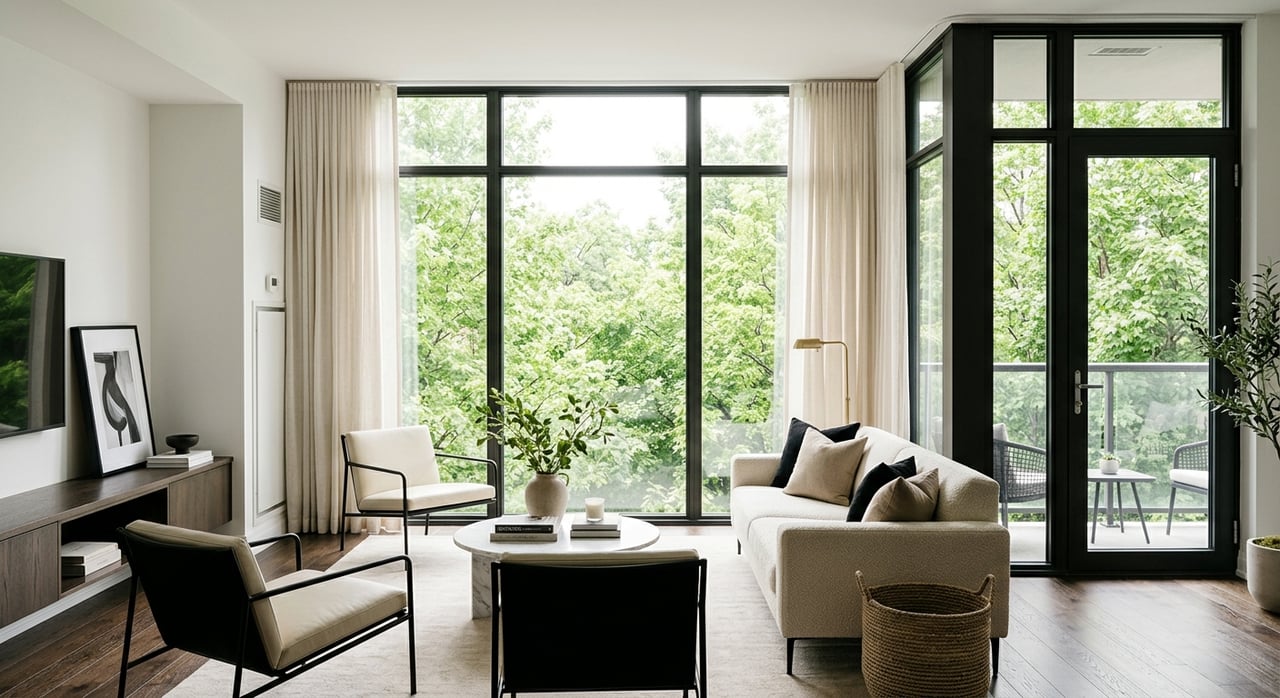
In Fairfax County, walkable town center living usually centers on condos, apartments, and townhomes. Detached homes are often located nearby, but usually outside the most active core blocks.
You can see that pattern in Reston’s broader housing mix, Mosaic’s apartments and townhomes, and Tysons’ residential components within mixed-use projects near Metro. If you are hoping for a lower-maintenance lifestyle, these communities may offer the type of setup you want.
What daily life can feel like
The appeal of walkable town center living often comes down to small daily conveniences. Instead of planning every trip around the car, you may be able to walk to coffee, casual meals, restaurants, fitness options, parks, playgrounds, seasonal events, or transit.
Reston Town Center’s plaza, dining, cinema, and seasonal ice rink show one version of that lifestyle. Mosaic’s playground, splash pad, and weekly market show another. Tysons adds a stronger transit-first dimension for people who want a larger urban environment.
Who this lifestyle often suits
This type of living tends to appeal to buyers who value convenience, a lower-maintenance home, and amenities within walking distance. In practical terms, that often includes commuters, downsizers, first-time buyers, and people who want a lock-and-leave style of ownership.
It can also work well for buyers who want nearby parks, public spaces, or everyday services without needing a large lot to maintain. The right fit depends on how you want your day-to-day routine to feel.
A key detail: walkable is location-specific
One of the most important things to understand is that walkability in Fairfax County is not uniform. These areas are walkable, but they are not always car-free, and the experience can change quickly from one block to the next.
Mosaic, for example, still includes substantial parking and a Metro shuttle. County plans also distinguish between the most intense core areas and nearby transition areas. If true walkability is high on your list, it is worth evaluating not just the neighborhood name, but the exact building or block.
How to choose the right town center
If you are deciding between Fairfax County’s walkable centers, start with your daily priorities. Ask yourself:
- Do you want the most established town-center environment?
- Is Metro access a top priority?
- Would you prefer a condo, apartment-style home, or townhome?
- Do you want a larger urban setting or a smaller mixed-use district?
- How important are parks, plazas, markets, and community events to your routine?
Reston can be appealing if you want an established center with a broad housing mix and strong open-space connections. Mosaic may fit if you want a compact, highly convenient district with homes integrated closely with shops and gathering spaces. Tysons may be the best match if you want a denser, transit-oriented environment with a bigger long-term urban vision.
When you are comparing options in Fairfax County, the details matter. The right guidance can help you look beyond the marketing language and focus on how a specific home lines up with the lifestyle you actually want. If you are exploring condos, townhomes, or mixed-use communities in Fairfax County, Brittanie DeChino can help you identify the locations, housing types, and daily-living tradeoffs that fit your goals.
FAQs
What does walkable town center living in Fairfax County mean?
- It usually means living in a mixed-use area where homes, shops, restaurants, public spaces, and sometimes transit are located closer together than in a traditional suburban pattern.
Which Fairfax County areas are known for walkable town center living?
- Reston Town Center, Merrifield and Mosaic, and Tysons are some of the county’s clearest examples of walkable, mixed-use centers.
What types of homes are common in Fairfax County town centers?
- Condos, apartments, and townhomes are the most common home types in the most walkable core areas, while detached homes are more often found nearby rather than in the center blocks.
Is Reston Town Center walkable and connected to Metro?
- Yes. Reston Town Center is a walkable mixed-use district, and the Silver Line Metro reached the area in 2022.
What makes Mosaic District in Merrifield appealing to buyers?
- Mosaic combines housing, retail, restaurants, parks, events, parking, bike-share access, and a weekday shuttle to Dunn Loring-Merrifield Metro, which supports both convenience and activity.
Is Tysons designed for walkability in Fairfax County?
- Yes. Fairfax County’s plan for Tysons focuses on a walkable, green urban center with growth concentrated near Metro and transportation improvements that support walking and other travel options.